
Bardet-Biedl-Syndrome · Center of Excellence

The Bardet-Biedl-Syndrome (BBS)

Interdisciplinary diagnostics, research and care at the Centre of Excellence

Bardet-Biedl syndrome (BBS) is a rare, genetically caused multisystem disorder belonging to the group of ciliopathies, which is caused by a malfunction of the cilia, tiny cellular projections. It affects numerous organ systems simultaneously and therefore requires highly specialised, interdisciplinary care.

Our Centre of Excellence combines clinical expertise, modern diagnostics and internationally networked research – with the aim of sustainably improving care for people with BBS and similar ciliopathies.

BBS is caused by genetic changes that disrupt the function of cilia – microscopic cell projections that are crucial for signalling processes in the body. Vision, metabolic regulation, kidney function and hormonal development are particularly affected. The cardinal symptoms of BBS are retinal dystrophy (retinitis pigmentosa), hyperphagia-associated obesity, renal abnormalities, polydactyly (extra fingers and toes), malformation of the reproductive organs and hormones, as well as behavioural and developmental disorders. However, the condition exhibits a high degree of clinical variability, which often delays diagnosis.

BBS requires the close coordination of specialised care and cutting-edge research. Patients with BBS face characteristic symptoms such as overeating and the resulting obesity, retinal degeneration and renal insufficiency. The treatment of BBS therefore requires a coordinated strategy that goes well beyond mere symptom management.

The BBS Centre of Excellence therefore brings together an interdisciplinary team dedicated to researching the links between endocrinology, genetics, neuroscience and metabolism, with a focus on their regulation via the melanocortin receptor signalling pathways. Doctors from various disciplines also work together with specialist nurses, therapists, scientists and coordinators to provide comprehensive care for patients with BBS and related rare genetic disorders. Research, diagnostics and therapy are constantly being improved through close cooperation with international expert groups. The BBS Centre of Excellence provides long-term, personalised support to those affected and their families. The latest scientific findings are incorporated into patient care.

Facts about Bardet-Biedl syndrome

  • Diagnosis: Diagnosing BBS is often difficult and is made late due to the variable symptoms. A definitive diagnosis is established through molecular genetic testing, in particular next-generation sequencing. Pathogenic variants in the BBS genes 1, 7 and 10 are the most common worldwide.

  • Inheritance:* BBS is inherited in an autosomal recessive manner. Over 26 different mutations in various genes are currently known to cause the condition. The number of identified genes has been steadily increasing recently. Many of these genes encode proteins that together form the BBSome or support its function.

  • Prevalence: BBS is a rare disorder with a prevalence of approximately 1 in 125,000 to 1 in 175,000 in Europe. In isolated populations such as Kuwait or Newfoundland (1:18,000), it is significantly higher. Due to delayed diagnosis and clinical and genetic variability, the number of unreported cases is likely to be high. The incidence increases the risk of developing autosomal recessive disorders.

Symptoms

Kidney involvement

> 50%

Hyperphagia and obesity

> 80%

Hypogonadism

> 50% (less common in females)

Retinal degeneration

> 90%

Developmental delay

> 50%

Polydactyly

> 60%

Other

(including anosmia, liver fibrosis, fatty liver, cardiac involvement, hearing impairments, dental abnormalities, Hirschsprung’s disease)


0


Age at onset
(in years)
Average age at diagnosis of BBS: 5,6 ± 4,8 years (8–19)

18

Cetiner, M., Pape, L., König, J. et al. Das Bardet-Biedl-Syndrom. Monatsschrift Kinderheilkunde (2024).
https://doi.org/10.1007/s00112-024-02030-7

Clinical symptoms vary greatly from patient to patient and depend on the gene involved. BBS is characterised by a number of key symptoms:

  • Eyes: Those affected suffer from progressive vision loss, known as retinitis pigmentosa. The progressive retinal dystrophy, which affects both cones and rods, usually occurs at an early age and initially manifests as night blindness. Almost all patients lose their sight completely by their thirties. Other possible symptoms include myopia, astigmatism, strabismus and cataracts.

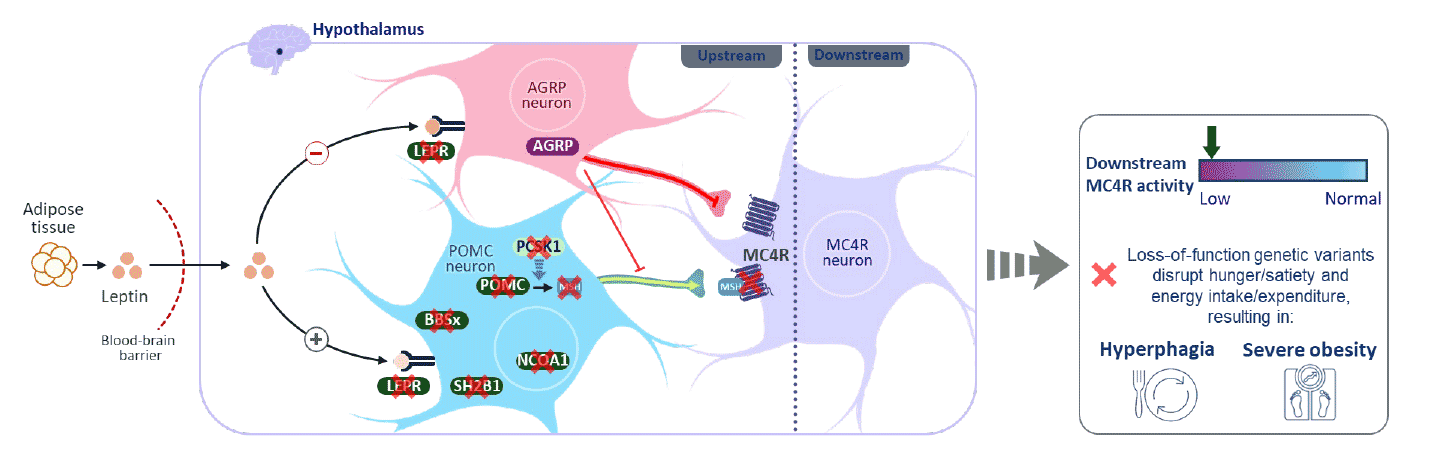
  • Metabolism: Severe obesity is a common symptom, often caused by uncontrollable hunger (hyperphagia) resulting from disturbances in various neuroendocrine signalling pathways. Of particular note here is the melanocortin-4 receptor pathway in the hypothalamus, the hunger centre of the brain.
  • Source 1. Montague CT, et al. Nature. 1997;387(6636):903-8. 2. Clément K, et al. Nature. 1998;392(6674):398-401. 3. Krude H, et al. Nat Genet. 1998;19(2):155-7. 4. Jackson RS, et al. Nat Genet. 1997;16(3):303-6. 5. Farooqi IS, et al. N Engl J Med. 2003;348(12):1085-95. 6. Bochukova EG, et al. Nature. 2010;463(7281):666-70. 7. Doche ME, et al. J Clin Invest. 2012;122(12):4732-6; 8. Loos, RJF and Yeo, GSH. Nat Rev Gens. 2022;23:120–133.
  • Skeletal anomalies: Limb malformations occur in 63 to 81% of cases. A commonly reported finding is post-axial polydactyly, which often affects only one limb, and rarely up to all four limbs. Occasionally, only a small skin tag is detectable in infancy. This abnormality is often corrected during early surgical intervention. The medical history is key here. Other malformations include shortened metacarpal, metatarsal and phalangeal bones.

  • Kidneys: BBS is associated with chronic renal insufficiency, with high clinical and genetic variability in presentation and severity. Biochemical laboratory tests reveal elevated renal retention values; sonographically, foetal renulation and the presence of renal cysts are indicative of a diagnosis of a ciliopathy such as BBS.

  • Development and behaviour: The spectrum and severity of developmental disorders is extremely broad, ranging from isolated mild speech development delays to severe global developmental disorders affecting speech, motor skills, cognition and emotions. Low frustration tolerance, impairments in abstract thinking, difficulties with concentration and learning, as well as self-harm and/or aggression towards others may be manifestations of behavioural disorders.

Treatment

Given the high degree of clinical variability, treatment should always be considered on an individual patient basis. However, treatment options for Bardet-Biedl syndrome are limited. There are currently no curative treatment options aimed at a cure. Supportive treatment options include the use of ophthalmic aids such as special glasses, renal replacement therapy or kidney transplantation in cases of advanced renal insufficiency, as well as the use of drug therapies to treat secondary symptoms such as arterial hypertension (high blood pressure) and type 2 diabetes mellitus. Particularly in children and adolescents, early intervention measures such as physiotherapy, occupational therapy and speech therapy are of central importance for the patients’ development. If obstructive sleep apnoea, characterised by breathing pauses and snoring, is diagnosed, the use of respiratory support may be advisable.


The melanocortin-4 receptor agonist setmelanotide has been approved for the treatment of Bardet-Biedl syndrome since 2023. It is currently authorised by the European Medicines Agency (EMA) for use in patients aged 2 years and older. Studies and clinical use have already shown that setmelanotide leads to a significant reduction in weight and hyperphagia. Furthermore, a positive effect on fatty liver has been demonstrated. Further study results suggest an effect on various hormonal axes. The clinical relevance of these research findings will need to be investigated in the coming years.

*The condition is usually inherited in an autosomal recessive manner.
  By 2023, 22 different genes had been associated with Bardet-Biedl syndrome:

BBS1: The mutation affects the BBS1 gene at the 11q13 locus.
BBS2: The mutation affects the BBS2 gene at the 16q13 locus.
BBS3: Mutation affects the ARL6 gene at the 3q11 locus.
BBS4: Mutation affects the BBS4 gene at the 15q22 locus.
BBS5: Mutation affects the BBS5 gene at the 2q31 locus.
BBS6: Mutation affects the MKKS gene at the 20p12 locus.
BBS7: Mutation affects the BBS7 gene at the 4q27 locus.
BBS8: Mutation affects the TTC8 gene at the 14q32 locus.
BBS9: Mutation affects the BBS9 gene at the 7p14 locus.
BBS10: Mutation in the BBS10 gene at the 12q21 locus
BBS11: Mutation in the TRIM32 gene at the 9q33 locus
BBS12: Mutation in the BBS12 gene at the 4q27 locus
BBS13: Mutation in the MKS1 gene at the 17q23 locus
BBS14: Mutation in the CEP290 gene at the 12q21 locus
BBS15: Mutation in the WDPCP gene at gene locus 2p15
BBS16: Mutation in the SDCCAG8 gene at gene locus 1q43
BBS17: Mutation in the LZTFL1 gene at gene locus 3p21
BBS18: Mutation in the BBIP1 gene at gene locus 10q25
BBS19: Mutation in the IFT27 gene at gene locus 22q12
BBS20: Mutation in the IFT172 gene at gene locus 9p21
BBS21: Mutation in the CFAP418 gene at gene locus 8q22
BBS22: Mutation in the IFT74 gene at gene locus 9p21